If you’ve ever opened a message and seen someone type “JW”, you might pause and wonder what exactly they’re trying to say.
In today’s fast-paced digital world, texting slang moves quickly, and new abbreviations appear every day. Among those, JW meaning in text has become incredibly common on WhatsApp, Snapchat, Instagram, Facebook, and TikTok.
This detailed, expert-level guide breaks down the exact meaning of JW, how it’s used, where it comes from, and the different contexts where people use it.
Whether you’re trying to understand someone’s message or trying to sound more fluent in modern internet language, this article will make everything clear. 😊
What Does JW Mean in Text?
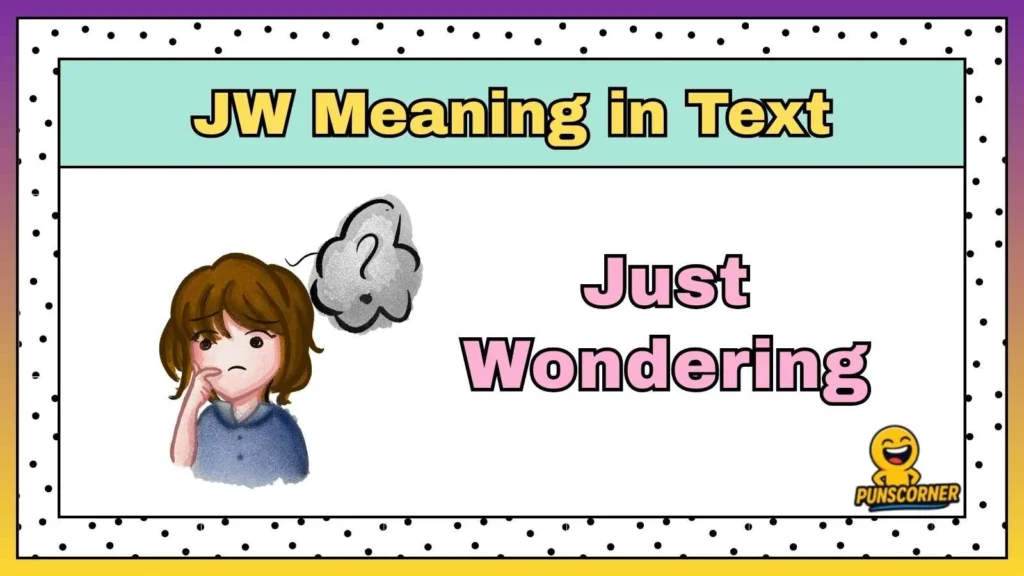
JW meaning in text is short for “Just Wondering.” It’s a casual way of asking a question, showing curiosity, or getting clarification without sounding too serious or demanding.
People use JW to make conversations softer, lighter, and more polite. Instead of jumping into a direct question, JW shows the person is simply curious — not pressuring you for an answer.
Example:
- JW, are you free tomorrow?
- JW, what time does the class start?
- JW, did you watch the new episode?
As you can see, it’s a friendly phrase that makes questions feel less intense.
Why Do People Use JW? 🤔
People use JW for several reasons, and each one connects to the casual nature of texting. Here are the most common reasons:
- To soften a question so it doesn’t feel demanding.
- To show curiosity rather than expectation.
- To avoid sounding rude or too direct.
- To start conversations naturally without awkwardness.
- To maintain a casual tone in digital chats.
How JW Is Commonly Used in Chat Conversations 📱
Below are the real-world ways people use JW meaning in text across different chatting platforms.
1. To Ask Casual Questions
A lot of people use JW simply to ask questions without making the conversation feel heavy.
JW, is the meeting still happening?
2. To Avoid Sounding Pushy
When someone doesn’t want to pressure you, they begin with JW to tone down the question.
JW if you’ve checked the file yet. No rush!
3. To Show Polite Curiosity
It’s a kind way to show interest without overstepping.
JW, what camera do you use? Your photos look great!
4. To Start a Conversation Naturally
JW can be a smooth conversation starter when you don’t know how to begin.
JW, are you watching the cricket match tonight?
5. To Gather Information
Sometimes it’s used when someone wants quick info.
JW, how much does this cost?
Alternative Meanings of JW (Less Common)
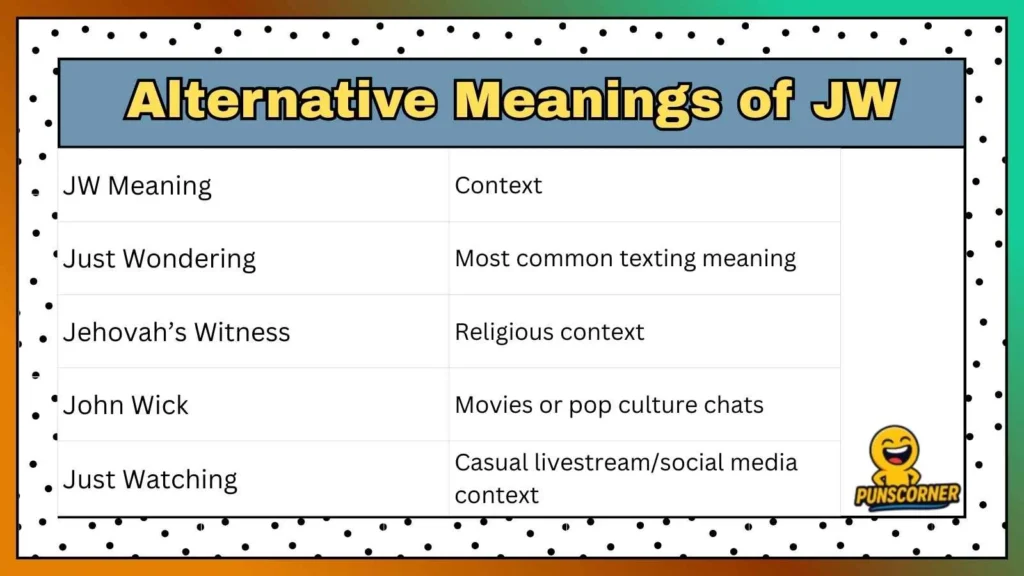
Most of the time, JW means “Just Wondering.” But in rare scenarios, it may have other meanings:
| JW Meaning | Context |
|---|---|
| Just Wondering | Most common texting meaning |
| Jehovah’s Witness | Religious context |
| John Wick | Movies or pop culture chats |
| Just Watching | Casual livestream/social media context |
But unless the topic clearly fits one of the rare meanings, assume the sender meant “Just Wondering.”
How to Respond When Someone Uses JW
If someone sends you a message containing JW, your answer depends on the question they’re asking. Here are some helpful examples:
1. Provide a Direct Answer
They asked because they’re curious — so answer directly.
JW, when will you be online?
→ I’ll be online in 10 minutes!
2. Ask for Clarification
If you’re unsure what they mean, politely ask back.
JW, did you finish the task?
→ Which one are you referring to?
3. Keep It Light and Casual
Since JW keeps conversations soft, your reply can match the tone.
JW, are you coming today?
→ I might! Not 100% sure yet 😊
Difference Between JW and Similar Slang Terms
| Slang | Meaning | How It Differs |
|---|---|---|
| JW | Just Wondering | Shows curiosity or soft questioning |
| JS | Just Saying | Used to add an opinion |
| LMK | Let Me Know | Requests updates or information |
| IDK | I Don’t Know | Expresses uncertainty, not curiosity |
When You Should NOT Use JW 🚫
Though JW is casual and useful, it’s not suitable in every situation.
1. Professional Emails
It can sound too informal in workplace emails.
2. Serious Conversations
Using JW in emotional or sensitive topics can look careless.
3. Important Questions
If the question is important, be clear instead of casual.
Long Examples of JW in Meaningful Conversations
Scenario 1: Friends Chatting
A: JW, are we still going to the cafe?
B: Yes! I’ll be there at 6.
Scenario 2: Students Discussing Homework
A: JW, what chapter did the teacher assign?
B: Chapter 5. Need help?
Scenario 3: Online Gaming Chat
A: JW, what rank are you now?
B: Almost Diamond!
Why JW Became Popular in Texting Culture 🌐
JW became popular because today’s texting habits focus on speed, convenience, and casual tone. People want to communicate quickly without sounding rude. Since JW is short, polite, and simple, it fits perfectly into digital communication trends.
- Shorter messages = easier scrolling
- Lower pressure in conversations
- Friendly tone for all age groups
- Works on all platforms (Snapchat, Instagram, WhatsApp)
Is JW Formal or Informal?
JW is considered informal texting language. It’s perfect for casual chats but not recommended for formal communication like:
- Business emails
- Academic writing
- Official reports
Does JW Mean the Same for All Age Groups?
Yes — most generations understand JW as “Just Wondering.” But younger people use it more frequently in everyday conversations.
- Teens: Most likely to use JW daily
- Young adults: Use it casually
- Older adults: Understand it but may use full words
How JW Helps Improve Digital Conversations
Using JW supports smoother communication by:
- Reducing misunderstandings
- Keeping questions polite
- Adding warmth and friendliness
- Softening direct questions
Related Slang Terms People Search Along With JW
- WDYM (What Do You Mean?)
- FR (For Real)
- ISTG
- TLDR
- BTW
- IDK
These are often used in the same texting environments, so understanding them helps with smoother communication.
FAQs
1. What is the real meaning of JW?
JW stands for Just Wondering and is used to ask questions politely.
2. Is JW a rude slang term?
No, JW is friendly and softens conversations. It makes questions feel light.
3. Can JW be used in professional chats?
It’s better to avoid it in formal communication and use full phrases instead.
4. Does JW have multiple meanings?
Yes, but the most common meaning in texting is “Just Wondering.”
5. Who uses JW more: teens or adults?
Teens and young adults use it more often, but all age groups understand it.
Conclusion
Understanding JW meaning in text helps you communicate better, faster, and more clearly in the digital world. Whether someone is simply curious or trying to avoid sounding too direct, JW keeps conversations smooth and friendly.
As texting slang evolves, staying familiar with these terms helps you stay confident and connected in every chat — from messaging friends to navigating social media conversations.